Your medical certificate is on the line. Your career — the one you’ve spent years building — depends on what you do next and, just as importantly, where you do it. For pilots navigating substance use disorder and the Federal Aviation Administration’s HIMS requirements, choosing the wrong treatment facility isn’t just a setback. It can ground you permanently.
So what makes a rehab the right choice for pilots specifically? The short answer: HIMS-vetted status, board-certified addiction medicine physicians, and a documented track record of supporting professional re-entry. Not every facility can check those boxes. The best rehab for pilots requiring FAA HIMS evaluation in Texas meets all three — and then some.
Four board-certified addiction medicine physicians. Daily medical care, weekends and holidays included. A Recovering Professionals Program built specifically for licensed professionals whose careers depend on where they seek treatment. La Hacienda Treatment Center has been successfully treating the devastating disease of addiction since 1972, and our Texas Hill Country campus is one of a small number of HIMS-vetted treatment facilities in the country. Our clinical and medical staffs underwent thorough instruction by professionals trained in the FAA’s Human Intervention Motivation Study program. We work in direct partnership with airline company HIMS peer monitors — because for pilots, getting this right isn’t optional.
What Is the FAA HIMS Program?
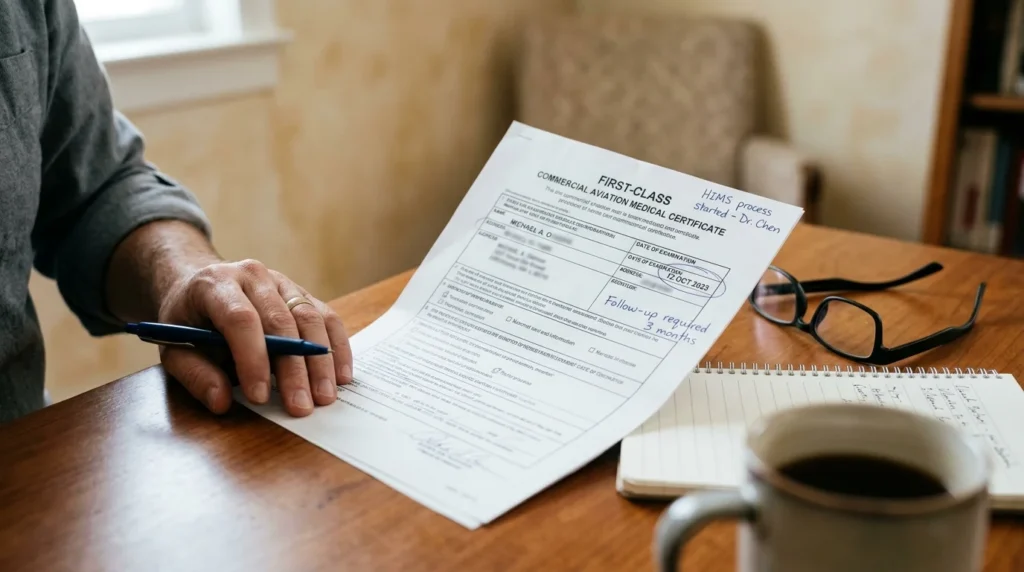
The Federal Aviation Administration’s Human Intervention Motivation Study — known as HIMS — is the structured pathway that allows pilots to regain their medical certificates after a substance use disorder diagnosis. It’s not a loophole. It’s not easy. And it absolutely requires that your treatment happen at a facility the FAA recognizes as qualified.
The HIMS program encompasses:
- A comprehensive evaluation by a qualified HIMS psychiatrist or aviation medical examiner (AME)
- FAA-approved inpatient addiction treatment at a vetted facility
- Ongoing monitoring — often for a minimum of two years following treatment
- Regular reporting and documentation to the FAA
- Coordination with airline HIMS peer monitors (for commercial airline pilots)
Can pilots use HIMS? Yes — and for pilots dealing with addiction, it’s the only sanctioned path back to the cockpit. The program doesn’t just monitor recovery. It validates it. That’s why the choice of treatment facility matters so much from day one.
Impact Story
A commercial airline pilot — we’ll call him Captain Mark — had successfully kept his drinking private for years. High-functioning. Never a close call. But when his airline’s HIMS peer monitor intervened following a mandatory check, he realized the window he’d been ignoring had a deadline attached. His wife made the call to La Hacienda. Within 48 hours, he was admitted to the Recovering Professionals Program. Fourteen months later, after completing treatment, monitoring, and the Special Issuance process, he returned to the flight deck. He’s been flying — and sober — for three years since.
Why the Treatment Facility You Choose Directly Affects Your FAA Outcome
This isn’t a point most general rehab websites will tell you plainly. So we will.
The FAA doesn’t recognize all addiction treatment facilities equally. If a pilot completes treatment at a facility that isn’t HIMS-vetted, that treatment may not satisfy FAA requirements — meaning you could finish a full residential program and still not be cleared to begin the formal reinstatement process. That’s time, money, and career risk you can’t get back.
What the FAA looks for in a qualifying treatment facility includes:
| Requirement | What It Means in Practice |
|---|---|
| HIMS-vetted status | Facility is recognized by FAA and familiar with documentation requirements |
| Board-certified addiction medicine physicians | Medical oversight meets FAA clinical standards |
| Daily physician contact | Patient sees a physician every day of treatment |
| Coordination with HIMS AMEs and peer monitors | Facility actively communicates with the pilot’s aviation support team |
| Documented treatment records | Detailed clinical records suitable for FAA Special Issuance submission |
The takeaway: your treatment record becomes part of your FAA file. The quality and completeness of that documentation — and the credentials of the facility that produced it — directly affect your reinstatement timeline.
La Hacienda’s clinical and medical teams are trained in HIMS requirements specifically. We don’t learn the process after you arrive. We already know it.
The Recovering Professionals Program at La Hacienda
We designed the Recovering Professionals Program for exactly this situation — highly capable, high-achieving people whose careers, licenses, and livelihoods are bound to where and how they seek treatment.
Pilots, physicians, nurses, lawyers, engineers, airline crew — the professionals who walk through our doors share a common psychology: they’ve been managing the appearance of control longer than most. They’re not weak. They’re sick. And they need a program that respects their intelligence while meeting them where they actually are.
What does the Recovering Professionals Program provide?
- Peer cohort. You’re not in treatment with a general population. You’re surrounded by other licensed professionals navigating similar high-stakes recovery. That peer context changes things.
- Daily physician access. Patients see a physician every single day of treatment — weekends and holidays included (and yes, that includes holidays). For pilots, this isn’t a nice-to-have. It’s an FAA requirement.
- HIMS-aligned documentation. Our medical and clinical teams understand what the FAA needs from your treatment record and prepare accordingly.
- Coordination with peer monitors. For commercial airline pilots, we work directly with HIMS peer monitors at your airline. You’re not alone in navigating this system.
- Discretion. Your career depends on it. We understand that.
Does the FAA allow pilots to go to therapy? Yes. Psychotherapy is fully compatible with both an unrestricted medical certificate and the Special Issuance process — and at La Hacienda, mental health services with a licensed psychiatrist are woven into treatment four to five days per week.
Medical Oversight That Meets a Higher Standard

What will fail an FAA medical exam? A host of things — but undisclosed substance use disorder or an inadequately documented treatment history tops the list. The FAA isn’t looking for perfection. It’s looking for honesty, proper treatment, and demonstrated sustained recovery. That process begins with medically rigorous care.
La Hacienda’s medical infrastructure is built for exactly this standard:
- Four board-certified addiction medicine physicians on site — Diplomats of the American Board of Addiction Medicine, with backgrounds in internal medicine and emergency medicine
- 24/7 nursing care — registered nurses, licensed vocational nurses, and direct care assistants around the clock
- Licensed Special Care Unit — operating since 1972, licensed by the State of Texas
- Nurse practitioners who extend care through admissions, medical rounds, diagnostic orders, and prescriptions
- Co-occurring disorder treatment — a licensed psychiatrist on staff four to five days per week for pilots managing anxiety, depression, or other mental health conditions alongside addiction
The staff-to-patient ratio at La Hacienda approaches 2:1 — among the highest in the country. That’s not an accident. It’s how we deliver care that actually meets the medical standard the FAA expects.
Impact Story
When Elaine, the spouse of a cargo pilot, contacted La Hacienda, she wasn’t sure her husband would agree to treatment. He’d been managing pain with prescription medication for two years following a back injury — and he knew what a diagnosis might mean for his certificate. What she didn’t know was that the HIMS program exists precisely to help pilots like him. The admissions team walked her through the process step by step. Her husband entered the Recovering Professionals Program within a week. The documentation his care team produced became the foundation of his successful Special Issuance application. His certificate was reinstated eight months after discharge.
Understanding the Costs and Timeline of FAA HIMS Treatment
Let’s talk numbers — because for pilots, financial and timeline questions come early in the process.
Treatment cost: The cost of residential addiction treatment varies based on program length, level of care, and facility. La Hacienda is in-network with most major insurance carriers, which meaningfully reduces out-of-pocket costs for many pilots. Verifying your benefits before admission is a straightforward process our admissions team handles with you.
HIMS psychiatric evaluation cost: Fees for a HIMS psychiatry assessment typically range from $2,400 to $3,500 — a cost that’s separate from your residential treatment stay and paid to the evaluating HIMS AME or psychiatrist.
How long does the HIMS program take? That depends on your individual history, substance, and the FAA’s determination. Monitoring periods have historically extended for a minimum of two years in most cases, though the FAA reviews each case individually. Treatment itself — meaning residential stay — is typically 28 to 45 days for pilots, depending on medical complexity and co-occurring conditions.
| Phase | Typical Timeline |
|---|---|
| Residential treatment | 28–45 days (varies by case) |
| HIMS psychiatric evaluation | Completed during or shortly after treatment |
| FAA Special Issuance review | 3–12 months (varies) |
| Monitoring period | Minimum 2 years for most cases |
How many pilots are in the HIMS program at any given time? Each year, the number typically ranges from 110 to 130. That’s a small community — which is exactly why the expertise of your treatment facility matters so much.
What Sets La Hacienda Apart for Pilots Seeking HIMS-Compliant Treatment
Fifty-plus years of proven results. Joint Commission accreditation. Texas DSHS licensure. A campus in Hunt, Texas — 75 miles northwest of San Antonio in the Texas Hill Country — where the setting itself becomes part of the recovery.

But for pilots, the specific credentials are what matter most:
- We are one of a small number of HIMS-vetted treatment facilities in Texas
- Our clinical and medical staffs trained under professionals with direct FAA HIMS expertise
- We work in active partnership with airline company HIMS peer monitors
- Our Recovering Professionals Program brings together pilots, healthcare workers, attorneys, and other licensed professionals who understand the stakes
- Patients see a physician every single day — weekends and holidays included — because daily medical contact isn’t just our standard; for many pilots, it’s an FAA requirement
What’s the success rate of the HIMS program overall? Research suggests the program success rate — measured by sustained abstinence — is approximately 85%, with a single relapse rate of about 12.7% and 3% for two or more relapses. Those are strong numbers. But they reflect outcomes for pilots who complete a proper HIMS-compliant treatment process. That process starts here.
Supporting Articles
- Recovering Professionals Program – The Recovering Professionals Group at La Hacienda Treatment Center is made up of patients with vocations that require them to be licensed or certified by a state board or other authority.
- Residential Inpatient Addiction Treatment Texas — An overview of what residential inpatient treatment involves at La Hacienda, including the structure, medical oversight, and continuum of care that forms the foundation of the Recovering Professionals Program.
- Top-rated Addiction Treatment Centers in Texas — A closer look at what separates credentialed, medically rigorous treatment programs from standard care in Texas — relevant for professionals evaluating their options carefully.
- Effective Treatment for Addiction — What the evidence says about what actually works in addiction treatment, and how La Hacienda’s model of daily physician access and 12-Step immersion reflects best practices.
- Long-term vs Short-term Rehab Programs — Pilots and other professionals often need clarity on program length before committing. This article walks through how treatment duration affects outcomes and what the right timeline looks like for complex cases.
- Rehab Centers That Accept Insurance in Texas — A practical resource on navigating insurance coverage for treatment — including what in-network status means for La Hacienda patients and how to verify your benefits before arrival.
Frequently Asked Questions
Can pilots use the HIMS program to return to flying after addiction treatment?
Yes. The FAA’s Human Intervention Motivation Study program is the structured pathway for pilots to regain their medical certificates following a substance use disorder diagnosis. It requires treatment at a HIMS-vetted facility, ongoing monitoring, and coordination with an aviation medical examiner. La Hacienda is one of a small number of HIMS-vetted treatment facilities in Texas.
What is the success rate of the HIMS program?
Research on the FAA HIMS program shows a sustained abstinence success rate of approximately 85%. The single relapse rate is about 12.7%, with 3% of participants experiencing two or more relapses. These outcomes reflect pilots who complete the full HIMS-compliant treatment and monitoring process — which begins with choosing the right facility.
How much does the FAA HIMS psychiatric evaluation cost?
HIMS psychiatric evaluation fees typically range from $2,400 to $3,500. This cost is separate from residential treatment and is paid to the qualified HIMS aviation medical examiner or psychiatrist conducting the evaluation. La Hacienda’s admissions team can help you understand how this fits into your overall treatment plan and what your insurance may cover.
What will fail an FAA medical exam for a pilot with a substance use disorder history?
Undisclosed substance use disorder, inadequate treatment documentation, or treatment at a non-HIMS-vetted facility can all result in a failed or denied FAA medical exam. The FAA expects full disclosure, properly documented treatment, and demonstrated sustained recovery through an approved monitoring process — all of which begin with completing treatment at a qualified facility.
Does the FAA allow pilots to go to therapy during or after treatment?
Yes. Psychotherapy is compatible with both an unrestricted medical certificate and the Special Issuance process. Many pilots continue therapy or resume it after returning to flight status. At La Hacienda, mental health services with a licensed psychiatrist are integrated into treatment four to five days per week — supporting the whole-person recovery the FAA looks for.
How long does the FAA HIMS monitoring process take?
Monitoring periods have historically lasted a minimum of two years for most pilots, though the FAA evaluates each case individually. Residential treatment itself typically runs 28 to 45 days. The Special Issuance review by the FAA can take anywhere from three months to a year depending on documentation quality and the complexity of your case.
Is the Recovering Professionals Program at La Hacienda available to all licensed professionals, or only pilots?
The Recovering Professionals Program serves a broad range of licensed professionals — pilots, physicians, nurses, attorneys, engineers, and others whose careers and credentials are directly affected by where and how they seek treatment. Pilots navigating FAA HIMS requirements have access to the same daily physician care, HIMS-aligned documentation, and peer monitor coordination that makes the program uniquely suited to their needs.