Most people don’t take marijuana addiction seriously at first. Not the person using it, not their family, not always even their doctor. It gets dismissed — “it’s just weed” — while life quietly falls apart around the edges. Relationships strain. Work suffers. The ability to feel okay without it fades. And one day, quitting on your own just doesn’t work anymore, no matter how many times you try.
So do people really go to rehab for weed? Yes — and more every year. Cannabis use disorder is a recognized medical condition, and professional weed addiction treatment works. The research is clear: people who receive structured addiction treatment for marijuana have significantly better outcomes than those who try to stop on their own. Treatment that addresses the physical, psychological, and behavioral dimensions of addiction gives recovery a real foundation.
La Hacienda Treatment Center has been successfully treating the devastating disease of addiction since 1972, including addiction involving marijuana and cannabis. From our campus in the Texas Hill Country, we’ve helped thousands of individuals from across Texas — including San Antonio, Houston, Dallas, Austin, Fort Worth, and beyond — find their way back. Our four board-certified addiction medicine physicians, 24/7 nursing care, and deep 12-Step immersion create a treatment environment that works for people who are genuinely ready to stop.
What Is Cannabis Use Disorder?
Here’s what the science says: marijuana addiction is real. It’s not a moral failing, a personality flaw, or a sign of weakness. It’s a disease — one that changes brain chemistry over time and makes stopping genuinely difficult without help.
Cannabis use disorder develops when the brain adapts to regular marijuana use, restructuring its reward system around the drug. The result is compulsive craving, seeking, and use — even when you can see the damage it’s doing. Approximately 9% of people who use marijuana develop dependence, and that number rises significantly for people who start young or use daily.
Common signs that use has crossed into addiction include:
- Needing more to get the same effect (tolerance)
- Continued use despite problems at work, school, or in relationships
- Inability to cut back even when you want to
- Using marijuana to cope with anxiety, stress, or emotional pain
- Spending significant time obtaining, using, or recovering from use
- Withdrawal symptoms when stopping — irritability, insomnia, anxiety, loss of appetite
Sound familiar? If any of these describe your situation — or someone you love — weed addiction treatment isn’t an overreaction. It’s the appropriate response to a real medical condition.
Why Quitting Weed Is Harder Than It Looks
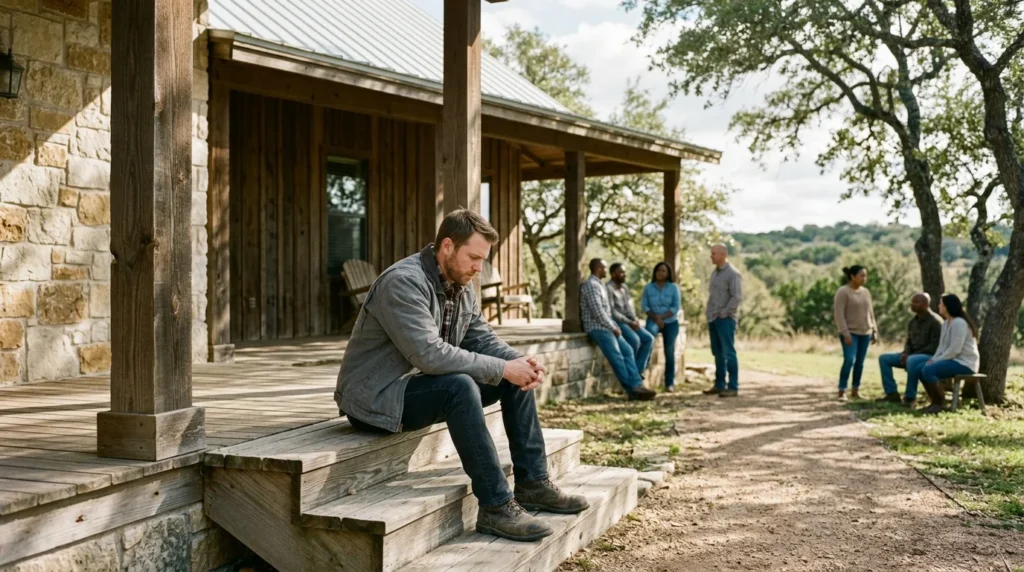
People underestimate marijuana withdrawal. That’s part of why so many people cycle through failed attempts before reaching out for help.
Here’s the thing: the brain’s response to regular marijuana use involves real, measurable changes in dopamine regulation. When use stops, the brain has to recalibrate — and that process is uncomfortable. Most withdrawal effects are at their worst in the first three days and gradually ease over the following one to two weeks, though sleep disruption and mood changes can persist longer.
What withdrawal from marijuana can look like:
| Symptom | Typical Onset | Duration |
|---|---|---|
| Irritability and anxiety | Days 1–3 | 1–2 weeks |
| Sleep disruption and vivid dreams | Days 1–3 | 1–3 weeks |
| Decreased appetite | Days 1–3 | 1–2 weeks |
| Restlessness | Days 1–4 | 1–2 weeks |
| Low mood or depression | Days 3–7 | 2–4 weeks |
These symptoms aren’t dangerous the way alcohol withdrawal can be, but they’re genuinely uncomfortable — and they’re why so many people relapse in the first week. Without professional support and a structured environment, the path of least resistance is picking up again just to feel normal.
And when marijuana is being used alongside other substances — alcohol, benzodiazepines, opioids — the medical picture becomes more complex. That’s where daily physician access becomes essential, not optional.
Who Goes to Weed Rehab?
There’s no single profile. People who seek weed addiction treatment come from all walks of life — teenagers and adults in their fifties, professionals and students, people who’ve tried other programs and people reaching out for the first time.
What they tend to share is this: they’ve tried to stop and couldn’t. Or they can stop for a few days, but they can’t stay stopped. Life has gotten smaller. Things they used to care about — relationships, ambitions, health, the future — have been pushed aside.
Impact Story
A father in Houston spent two years telling himself his son’s daily marijuana use wasn’t “serious enough” for treatment. His son, Kevin, was 24, unemployed, and had dropped out of college twice. He wasn’t violent. He wasn’t using “hard drugs.” But he hadn’t left the house in three weeks and had stopped returning calls from old friends. After a conversation with a counselor at La Hacienda, the father realized he’d been measuring the problem by the wrong standard. Kevin entered residential treatment and, after 35 days, began a continuing care plan that included outpatient support and regular 12-Step meetings. Eight months later, Kevin had his first full-time job. His father said the hardest part was letting himself believe that “just weed” could actually need real treatment.
If you’re a parent reading this at midnight, wondering whether what you’re seeing is serious enough — it is. The threshold for treatment isn’t a particular drug. It’s whether the disease is causing damage and whether the person can stop on their own. That’s the question.
What Does Weed Rehabilitation Actually Look Like?
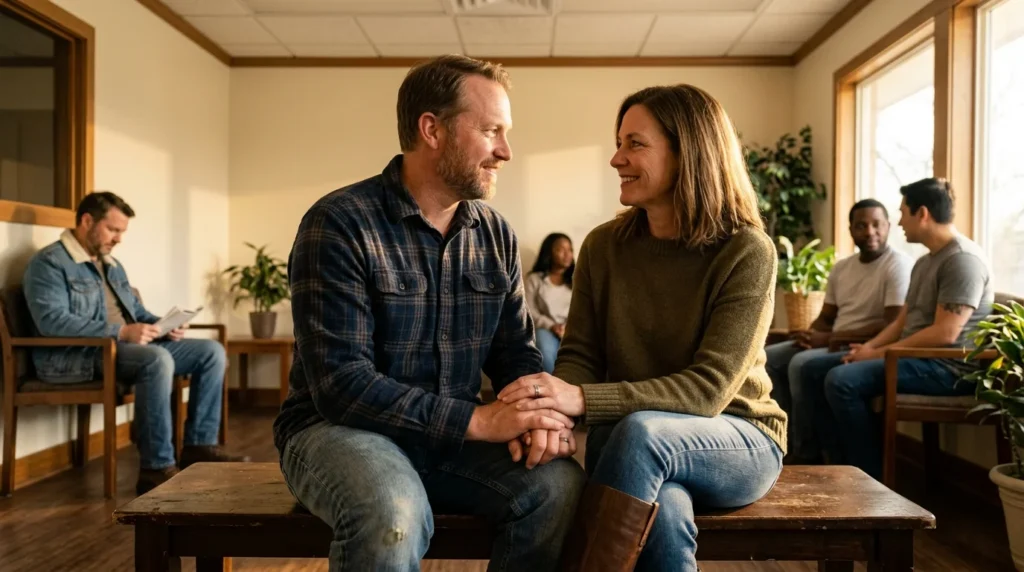
Weed rehabilitation isn’t one thing. The right level of care depends on the severity of the addiction, whether other substances are involved, and whether the individual has co-occurring mental health conditions like anxiety, depression, or trauma.
Levels of care typically include:
- Medically supervised detox — For those who need close monitoring through withdrawal, especially when other substances are involved
- Residential treatment — Intensive, structured, immersive care on a treatment campus; daily physician visits; group and individual therapy; 12-Step programming
- Partial hospitalization (PHP) — A step down from residential; structured daytime programming while living on or near campus
- Intensive outpatient (IOP) — Several hours of treatment per day, multiple days per week; appropriate for those with strong support systems
- Continuing care — Ongoing therapy, support groups, and check-ins after formal treatment ends
At La Hacienda, patients see a physician every single day of treatment — weekends and holidays included. That’s not common. Most programs don’t come close to that standard. But addiction affects the body and mind simultaneously, and those changes require daily attention.
The 12-Step immersion at La Hacienda isn’t a checkbox. It’s a central part of how recovery takes hold — building community, accountability, and a framework for living without the substance that had become the center of everything.
Impact Story
Priya had smoked marijuana every day for eleven years. She functioned — held a job, kept her apartment, maintained friendships on the surface. But she’d been anxious without it since her mid-twenties, and the anxiety had been getting worse, not better, even as her use increased. After a therapist referred her for an evaluation, she entered residential treatment at La Hacienda. What surprised her most wasn’t the therapy or the structure — it was the daily contact with a physician who treated her anxiety as a real, co-occurring condition that deserved real attention. “I kept expecting someone to tell me I wasn’t sick enough,” she said. “No one ever did.”
How La Hacienda Treatment Center Approaches Marijuana Addiction Treatment
Let’s be real about something: not every treatment center is equipped to handle the full picture of addiction. Some facilities offer counseling without medical care. Others treat the substance but not the underlying conditions that drove the use.
La Hacienda takes a different approach — and it’s been working for more than five decades.
Our clinical team includes four board-certified addiction medicine physicians on site. Not on-call. Not available by request. On site, seeing patients every single day (and yes, that includes weekends and holidays). Nurse practitioners extend that care through admissions, medical rounds, diagnostic orders, and prescriptions. Our nearly 2:1 staff-to-patient ratio is among the highest in the country.
For patients with co-occurring mental health conditions — anxiety, depression, PTSD — our licensed psychiatrist provides mental health services four to five days per week. This matters enormously for people whose marijuana use is tangled up with emotional pain they haven’t known how to address any other way.
We’re Joint Commission accredited and licensed by the Texas Department of State Health Services. We’re in-network with most major insurance carriers — because treatment that’s out of financial reach doesn’t help anyone. And many of our staff members are in recovery themselves. They understand this disease from the inside.
Our 40-acre campus in Hunt, Texas, gives patients the space — literal and figurative — to begin rebuilding. The grounds along the river have a way of quieting something in people that noise and urgency kept wound tight. That’s not incidental to treatment. It’s part of it.
Supporting Articles
- Nector Collector — Learn how to recognize when marijuana use has become a dependency, including early warning signs and paraphernalia that families and individuals often overlook.
- Co-Occurring Disorders and Addiction Treatment — Many people who struggle with marijuana use also live with anxiety or depression. This article explains how dual diagnosis treatment addresses both at the same time.
- What to Expect on Our Addiction Treatment Campus — A clear, honest walk-through of what the first days and weeks of residential addiction treatment actually look like at La Hacienda.
- Addiction is a Family Disease — For parents, spouses, and siblings who know something has to change — practical guidance on how to take the first step.
- La Hacienda Alumni and Continuing Care — Recovery doesn’t end when residential treatment does. This article covers the next phase of care and why it matters so much.
Frequently Asked Questions
Do people need to go to rehab for weed?
Yes — for many people, professional treatment is the difference between continued struggle and lasting recovery. When someone can’t stop using marijuana despite real consequences, or when attempts to quit on their own have repeatedly failed, structured weed rehabilitation provides the medical, psychological, and community support that makes sustained recovery possible.
Why is it so hard to quit weed on your own?
Regular marijuana use changes how the brain produces and responds to dopamine — the chemical connected to reward and pleasure. When you stop, the brain has to recalibrate, which triggers withdrawal symptoms like irritability, anxiety, and sleep disruption. Without support, many people return to use just to relieve that discomfort. Professional treatment breaks that cycle.
How long does it take to reset from marijuana use?
The most intense withdrawal symptoms — irritability, anxiety, poor sleep — typically peak in the first three days and ease over one to two weeks. However, mood disruption and sleep irregularities can persist for several weeks. The brain’s fuller neurochemical recalibration takes longer, which is why ongoing care after initial treatment is so important.
What’s the hardest part of quitting weed?
Research consistently shows that days one through three of stopping are the most difficult, with anxiety, irritability, and physical discomfort at their peak. But for many people, the psychological challenge — learning to manage stress, boredom, or emotional pain without marijuana — is what requires the most sustained work over time.
Is quitting marijuana cold turkey safe?
Unlike alcohol or benzodiazepine withdrawal, marijuana withdrawal isn’t typically life-threatening. But it’s genuinely uncomfortable, and attempting to stop without support significantly increases the risk of relapse. When other substances are involved, or when there are co-occurring medical or mental health conditions, medically supervised detox is the safer and more effective path.
What is weed addiction treatment like at a residential facility?
Residential weed addiction treatment combines medically supervised care, structured daily programming, individual and group therapy, and 12-Step immersion. At La Hacienda, patients see a physician every single day — weekends and holidays included — and receive individualized treatment plans that address the full picture of their health, including any co-occurring mental or physical conditions.
Does insurance cover rehab for weed?
Many insurance plans — including those through major carriers — cover addiction treatment, including treatment for cannabis use disorder. La Hacienda is in-network with most major insurance carriers. The best way to find out what your plan covers is to reach out directly, and our team can help verify your benefits and walk you through next steps.