Here’s a question worth sitting with: what is actually happening inside your body when addiction takes hold? Not the social consequences, not the legal risks — the physical reality of what substances do to the organs, the brain, and the nervous system that keep you alive. Understanding what drugs do to your body isn’t about fear. It’s about truth. And the truth is, addiction is a devastating disease — one that changes body chemistry, rewires the brain, and progressively damages nearly every major system if left untreated.
Direct answer: Drugs enter the bloodstream and interfere with how neurons send, receive, and process signals in the brain. Depending on the substance, this disruption causes changes in heart rate, blood pressure, body temperature, mood, and judgment — while triggering compulsive craving, seeking, and use that drives the cycle of addiction forward.
La Hacienda Treatment Center has been successfully treating the devastating disease of addiction since 1972 from our 40-acre campus in the Texas Hill Country. Our clinical team — including four board-certified addiction medicine physicians who see patients every single day, weekends and holidays included — understands how drugs affect the body at every level, from acute detox to long-term recovery. We’ve helped thousands of individuals and families across Texas, from San Antonio and Houston to Dallas, Fort Worth, and Austin, understand this disease and begin reversing its progression.
How Drugs Affect the Brain
No conversation about what drugs do to your body is complete without starting here. The brain is ground zero. Everything else follows.
Drugs interfere with the way neurons communicate — the chemical signals that regulate mood, motivation, memory, pain response, and decision-making. Substances like opioids and cannabinoids mimic naturally occurring chemicals in the brain, slipping past the brain’s defenses because their structure resembles what the body already produces. Stimulants force an artificial surge of dopamine. Depressants slow down the entire central nervous system.
The result? The brain begins to adapt. It compensates by producing less of its own feel-good chemicals and becoming less sensitive to them. This is tolerance — and it’s why someone needs more of a substance over time to feel the same effect. That’s not a choice. That’s the brain literally rewiring itself around the drug.
Impact Story*
Chris had been a high school football coach in San Antonio for nearly two decades. After a knee surgery, he was prescribed opioids for the pain — and within a year, he couldn’t get through a day without them. He told his wife he could stop whenever he wanted. But his brain had already changed. When he finally called La Hacienda, he didn’t understand why stopping felt physically impossible. The medical team explained what was happening in his nervous system, not as a lecture, but as a diagnosis. That reframe — from moral failure to medical disease — was the turning point. Three years later, he’s back on the sideline. Coaching again.
And it’s not just the reward system. Prolonged substance use affects the prefrontal cortex — the part of the brain responsible for impulse control and judgment. That’s why someone in active addiction makes decisions that don’t make sense to anyone watching. The brain that’s doing the deciding isn’t functioning the way it was designed to.
The Brain’s Reward System Under Pressure
The brain naturally releases dopamine in response to things that support survival — food, connection, safety. Drugs hijack that system, flooding it with dopamine at levels the brain was never built to handle. Over time:
- Natural pleasures lose their appeal
- The substance becomes the brain’s primary reference point for “reward”
- Withdrawal sets in when the drug isn’t present, driving compulsive use
- Seizures, stroke, mental confusion, and brain damage become real risks with prolonged heavy use
This isn’t a personality flaw. This is neurochemistry under assault.
What Drugs Do to the Body’s Major Systems
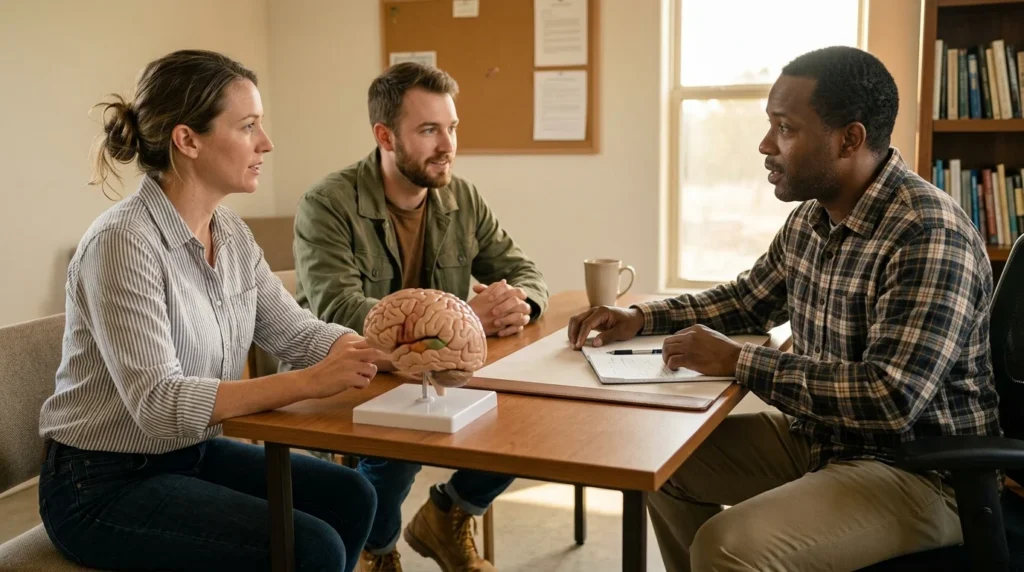
So what can drugs do to your body beyond the brain? The answer is: a lot. And the damage accumulates. Here’s how addiction affects the body’s major systems over time.
| Body System | Common Effects of Substance Use |
|---|---|
| Cardiovascular | Elevated heart rate and blood pressure, irregular heartbeat, increased stroke risk |
| Respiratory | Slowed or stopped breathing (opioid overdose), lung damage, chronic cough |
| Liver | Impaired filtering function, fatty liver, cirrhosis, liver failure |
| Immune System | Weakened defenses, increased susceptibility to infection and disease |
| Gastrointestinal | Nausea, vomiting, severe constipation or diarrhea, appetite loss |
| Endocrine | Disrupted hormone production, sexual dysfunction, menstrual irregularities |
| Musculoskeletal | Muscle wasting, bone density loss, chronic pain |
What that table doesn’t capture is the compounding nature of this damage. These aren’t isolated problems — they interact. Liver damage affects how the body processes everything, including medications. Immune suppression opens the door to infections that then worsen other conditions. Addiction doesn’t attack one system. It attacks all of them.
How Drugs Affect the Body Over Time
Here’s what that progression often looks like in the real world:
- Early use — The body tolerates the substance. Effects feel manageable or even pleasant.
- Increasing tolerance — The brain adapts. More substance is needed to achieve the same effect.
- Dependence — The body now requires the substance to function at baseline. Stopping causes withdrawal.
- Active addiction — Compulsive use despite negative consequences. Physical and mental health deteriorate.
- Crisis point — Organ damage, overdose risk, mental health emergencies, or complete breakdown of daily function.
The disease is progressive. That’s not meant to frighten — it’s meant to be honest. Because understanding the trajectory is exactly what motivates people to get help before the damage becomes irreversible.
What Drugs Do to Your Face and Appearance
How do drugs affect the body from the outside? Visible physical changes are often the first thing families notice — and they can be dramatic.
Depending on the substance, you might see:
- Sudden, significant weight loss — leading to a gaunt facial appearance as fat loss occurs
- Skin changes — flushing, pallor, acne, sores from compulsive scratching, or injection site marks
- Dental deterioration — accelerated tooth decay and gum disease (particularly with stimulants)
- Aged appearance — chronic stress on the body accelerates visible aging
- Redness around the mouth and nose — from inhalant use or alcohol’s effect on blood vessels
- Puffy or swollen face — from liver dysfunction affecting fluid regulation
These changes aren’t cosmetic inconveniences. They’re the body signaling that something is seriously wrong internally. Don’t dismiss them.
The Danger of Withdrawal — Why Medical Supervision Matters
Want to know one of the most dangerous moments in addiction? It’s not always the using. Sometimes it’s the stopping.
Withdrawal from certain substances — particularly alcohol, benzodiazepines, and opioids — can be medically dangerous. Symptoms can include:
- Severe anxiety, agitation, and insomnia
- Elevated heart rate and blood pressure
- Tremors, muscle cramps, and pain
- Hallucinations and delirium
- Seizures (especially with alcohol withdrawal)
This is why detox must be medically supervised. Attempting to withdraw alone is not just uncomfortable — it can be life-threatening.
Impact Story*
Patricia’s son had been drinking heavily for years before she called La Hacienda from her home in Houston. She’d read enough to know that alcohol withdrawal could be dangerous, and she wasn’t willing to risk him trying to quit cold turkey at home again. What she didn’t expect was how thoroughly the clinical team would walk her through the entire process — what was going to happen medically, why daily physician visits mattered, what she could expect during the first week. Her son spent three weeks at La Hacienda. Patricia joined the family program. She told us later that having a medical team she trusted made it possible for her to finally let go of the fear she’d been carrying for years.
At La Hacienda, patients see a physician every single day of treatment — weekends and holidays included. That’s not standard in this industry. It’s why we can safely manage the medical complexity of withdrawal while simultaneously beginning the work of recovery.
What Happens to Your Mind — Mental Health and Co-Occurring Disorders
Addiction and mental health are deeply connected. It’s hard to overstate this. Depression, anxiety, trauma, and bipolar disorder frequently co-occur with substance use — and each one can worsen the other.
Does addiction cause mental illness, or does mental illness lead to addiction? The honest answer is: it goes both ways. Many people who struggle with undiagnosed mental health conditions turn to substances to manage pain they don’t have words for. And substances themselves can trigger or worsen psychiatric symptoms — paranoia, hallucinations, aggression, impaired judgment, and profound hopelessness.
Treatment that addresses only the addiction — without treating the underlying mental health conditions — doesn’t produce lasting recovery. That’s why dual diagnosis care matters. Our team includes a licensed psychiatrist who works with patients four to five days per week, providing mental health services alongside addiction treatment.
How La Hacienda Approaches the Disease of Addiction

What sets La Hacienda Treatment Center apart isn’t any single program feature. It’s the integration of everything — medical care, spiritual principles, and individualized attention — working together on behalf of each patient.
Our clinical team includes physicians credentialed in addiction medicine, internal medicine, and emergency medicine. The nearly 2:1 staff-to-patient ratio — one of the highest in the country — means patients aren’t waiting for attention. They’re getting it, every day, from people who understand this disease both clinically and personally. Many of our staff members are in recovery themselves. That changes every conversation.
The 12-Step immersion at La Hacienda isn’t an add-on. It’s woven into the treatment model — because full recovery of body, mind, and spirit requires more than detox. It requires a framework for living. Our Joint Commission accreditation and Texas DSHS licensure reflect the clinical standards we hold ourselves to. And our alumni — people who walked through our doors in crisis and walked out into a life of purpose — are the most honest measure of whether any of this works.
La Hacienda is in-network with most major insurance carriers, because access to quality treatment shouldn’t be another obstacle for families already carrying enough weight.
If you’re searching for what drugs do to your body, you’re probably not just looking for biology. You’re looking for a reason to reach out. This is it. Call today.
Supporting Articles
- Understanding Opioid Dependence Symptoms Risks and Treatment Options — A detailed look at how opioid dependence develops, what physical and psychological symptoms signal a problem, and what treatment looks like in a medically supervised setting.
- Treatment for Substance Use Disorder — An overview of what evidence-based substance use disorder treatment involves and how the continuum of care supports lasting recovery.
- Detox Inpatient Rehab — Explains the medical detox process, what to expect during inpatient withdrawal management, and why 24/7 clinical supervision matters.
- Drug Addict Behavior in Active Addiction — Explores how active addiction changes behavior, thinking, and relationships — and what those changes signal about the underlying disease.
- Residential Inpatient Addiction Treatment Texas — A guide to what residential inpatient treatment involves, who it’s right for, and what families can expect from the process.
Frequently Asked Questions
What Does a Drug Do to the Body?
Drugs enter the bloodstream and disrupt how the brain’s neurons communicate, sending abnormal signals throughout the central nervous system. This alters how a person thinks, feels, and behaves while also affecting physical functions like heart rate, blood pressure, and body temperature. Over time, these disruptions accumulate into organ damage, dependence, and addiction.
What Do Drugs Do to Your Brain?
Drugs interfere with the brain’s natural neurotransmitter system — especially dopamine, which regulates pleasure and motivation. Some substances mimic the brain’s own chemicals; others flood the system with artificial surges. Over time, the brain adapts by producing fewer natural chemicals, making it dependent on the substance to feel normal. This is the neurological foundation of addiction.
What Are 5 Common Side Effects of Using Drugs?
The most common physical and psychological side effects include impaired judgment and decision-making, changes in mood ranging from euphoria to paranoia, aggression or emotional instability, hallucinations (with certain substances), and addiction itself — the compulsive craving, seeking, and use that characterizes the disease. Physical effects like appetite changes and sleep disruption are also nearly universal.
How Do Drugs Affect the Body Over the Long Term?
Long-term substance use affects virtually every major body system — damaging the liver, weakening the immune system, straining the heart, impairing lung function, and disrupting hormone production. The brain undergoes structural changes that affect memory, impulse control, and emotional regulation. The damage is progressive, meaning it compounds the longer the disease goes untreated.
What Do Drugs Do to Your Face and Physical Appearance?
Substance use causes visible physical changes including sudden weight loss, skin problems (acne, sores, pallor, or flushing), accelerated aging, and dental deterioration. These changes reflect deeper internal damage — particularly to the liver, immune system, and hormone regulation — and are often among the first signs families notice in a loved one.
What Are the Dangers of Stopping Drugs Without Medical Help?
Withdrawal from certain substances — especially alcohol, benzodiazepines, and opioids — can be medically dangerous and even life-threatening. Symptoms can include seizures, severe cardiovascular stress, hallucinations, and delirium. Medical supervision during detox isn’t optional for many patients — it’s essential for safety. At La Hacienda, patients see a physician every single day of treatment, including weekends and holidays.
Can the Body Recover From the Effects of Drug Use?
Yes — full recovery is possible, and it’s happening every day. The brain demonstrates remarkable plasticity, meaning it can rebuild healthy neural pathways given time, proper treatment, and the right support. Physical damage to organs can stabilize and partially reverse with sustained sobriety and medical care. Recovery isn’t just abstinence — it’s the restoration of body, mind, and spirit.